
Mezcal: Origin, Craft, and What the U.S. Market Is Rewarding Now
Mezcal is not a trend — it is a world
Mezcal has become one of the most magnetic words in modern spirits because it promises something tequila sometimes cannot: variation, mystery, texture, smoke, place, and the sense that the bottle still belongs to a maker more than a machine. But that mystique only works when it is grounded in real understanding.
At Bleu Wine & Spirits, mezcal deserves that kind of treatment. It is not just another shelf segment under the broader agave umbrella. It is a category where production method, agave species, region, and proof can change the experience dramatically. The more that is explained, the more the right customer leans in.
What mezcal is
Mezcal is a protected Mexican spirit covered by the Denomination of Origin Mezcal. Its production and commercialization are governed by NOM-070-SCFI-2016, and the certification ecosystem exists to protect authenticity, origin, and compliance. Unlike tequila, which is tied to blue agave alone, mezcal can be made from multiple agave species depending on region and producer tradition.
COMERCAM describes its role as guaranteeing the authenticity of mezcal consumed in Mexico and around the world, while the norm itself establishes the characteristics and specifications the spirit must satisfy in production, bottling, and commercialization.
Why mezcal feels broader than tequila
Because it is. Mezcal is not a single-lane category. It can be rural or polished, bright or deeply smoky, approachable or intensely savory. It can express espadín, tobalá, tepeztate, cuishe, arroqueño, and many other agaves depending on the producer and region. That diversity is part of the appeal — and part of the challenge.
How mezcal is typically made
The core production arc is deeply physical and often highly artisanal:
- Harvest: mature agaves are selected after years of growth.
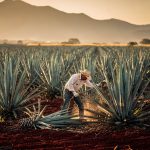
- Roasting: piñas are commonly cooked in earthen pit ovens, which can create the smoky profile many drinkers associate with mezcal.
- Crushing: roasted agave is crushed by hand, tahona, or other methods depending on the palenque.
- Fermentation: agave sugars are fermented, often in open-air tanks or traditional vessels.
- Distillation: the fermented liquid is distilled, with vessel choice and local technique shaping the final spirit.
That process is why mezcal often feels more tactile than industrial. The category carries visible human labor at every stage, and consumers increasingly respond to that.
Where mezcal comes from
COMERCAM states that the protected mezcal denomination currently covers multiple Mexican states and municipalities, including Oaxaca, Guerrero, Durango, San Luis Potosí, Zacatecas, specific municipalities in Guanajuato, Michoacán, and Puebla. For many consumers, Oaxaca is the emotional center of mezcal, but the category is larger than one state and more varied than one flavor expectation.
For retail storytelling, that opens the door to a richer conversation. Instead of reducing mezcal to “smoky tequila,” a better approach is to present it as a family of regional agave spirits with distinct agricultural and cultural signatures.
What the U.S. market is telling us now
The agave conversation in the United States is still powerful, but it is maturing. DISCUS continues to report tequila and mezcal together as one of the largest spirits revenue categories, reaching $6.4 billion in supplier sales in 2025. At the same time, IWSR describes a more selective premium environment, where growth opportunities remain, but consumers are more price-sensitive than they were during the previous expansion wave.
That nuance matters for mezcal. Public category reporting often combines tequila and mezcal, which can hide what is happening inside mezcal specifically. Mezcalistas noted in early 2026 that the full standalone picture for mezcal was still incomplete pending COMERCAM’s annual report, but also highlighted a tougher pricing environment, with Nielsen data indicating tequila sales were roughly flat in 2025 while mezcal sales declined. Even inside that pressure, smaller craft-oriented agave brands showed pockets of growth.
The takeaway is not that mezcal is fading. The takeaway is that the category now rewards differentiation more than hype. Bottles with a compelling producer story, clearer regional identity, thoughtful pricing, and strong on-premise or educational support are better positioned than brands that rely only on smoke and packaging.
Why mezcal still matters so much
Because mezcal delivers something consumers cannot get from standardized categories: sensory surprise. One bottle can taste floral and saline. Another can feel earthy, herbal, and almost wild. One is built for a serious sip; another wakes up a cocktail with a single ounce. Mezcal is also one of the few categories where education itself adds value at the shelf. Customers often need permission to slow down, ask questions, and discover.
That is good news for an independent retailer. When the product requires a story, the storyteller matters.
How to guide a customer toward the right bottle
- Start with occasion: neat sipping, gifting, smoky cocktails, or first-time exploration.
- Use agave type as a guide, not intimidation: espadín for approachability; rarer agaves for exploration.
- Talk about production: pit-roasted, artisanal methods, proof, and region can explain flavor better than marketing adjectives.
- Reset expectations: mezcal is not one flavor. Smoke is part of the story, not the whole story.
How Bleu can win with mezcal content
Bleu’s mezcal assortment already suggests depth. The next move is to make that depth legible. Educational blog posts, concise producer notes, “start here” recommendations, and event-led tastings can turn curiosity into confidence. In a market where many consumers still want guidance, clarity becomes a sales tool.
Mezcal does not need to be simplified. It needs to be translated well.